
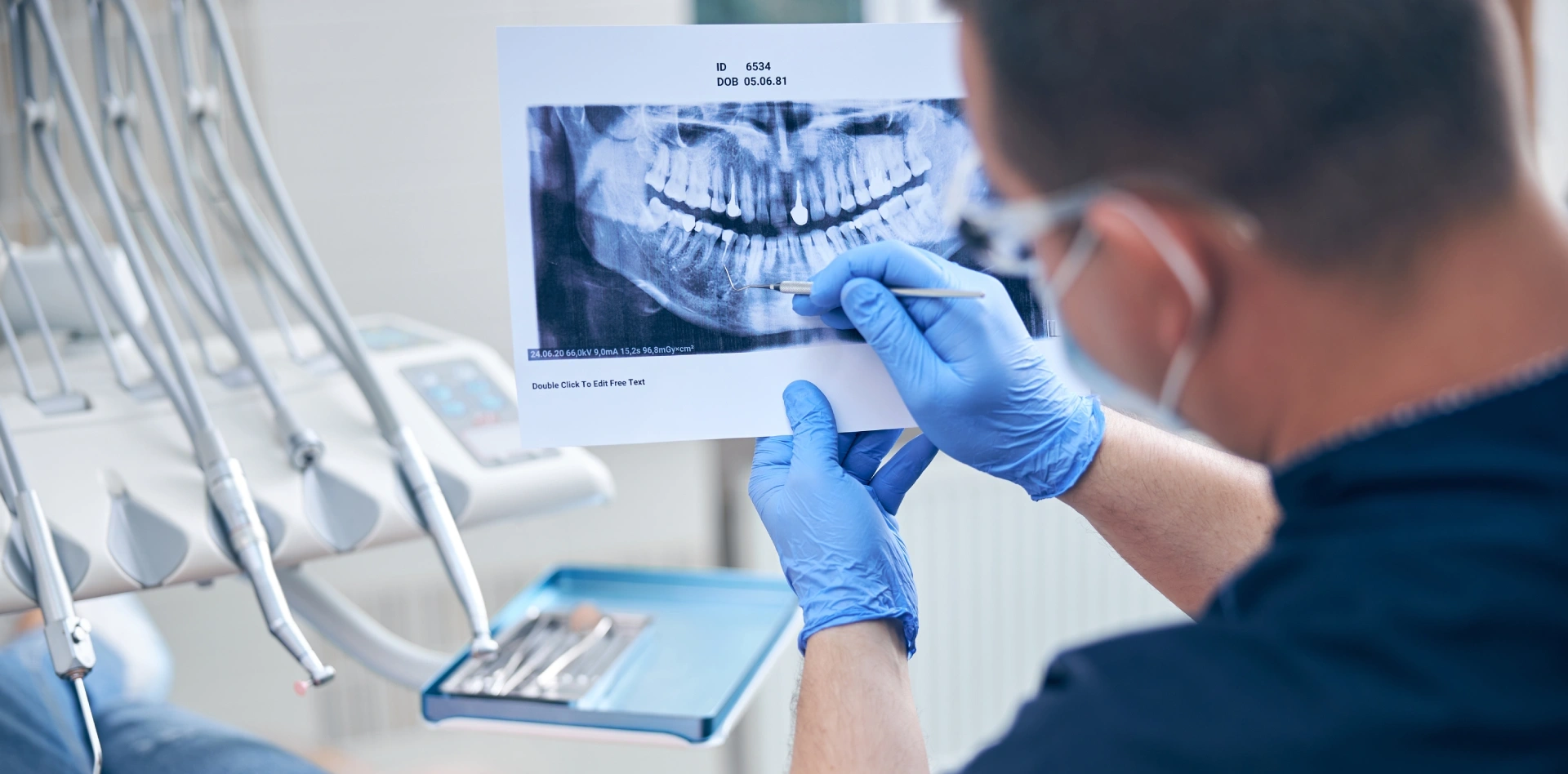
Orthodontic Surgeryin Long Island City
Moving teeth requires a little help sometimes. When your orthodontist and your surgeon work together, the results go beyond what either could achieve alone.
Every tooth has a place, but some need convincing.
Orthodontic treatment can work wonders, but there’s a limit. Adding surgery to the equation expands that limit and facilitates tooth movement in ways braces or aligners can’t do by themselves. At Gantry OMS, Dr. Miller works closely with your orthodontist to plan and execute the surgical component of your care, so you can come away with the beautiful smile you’ve envisioned.
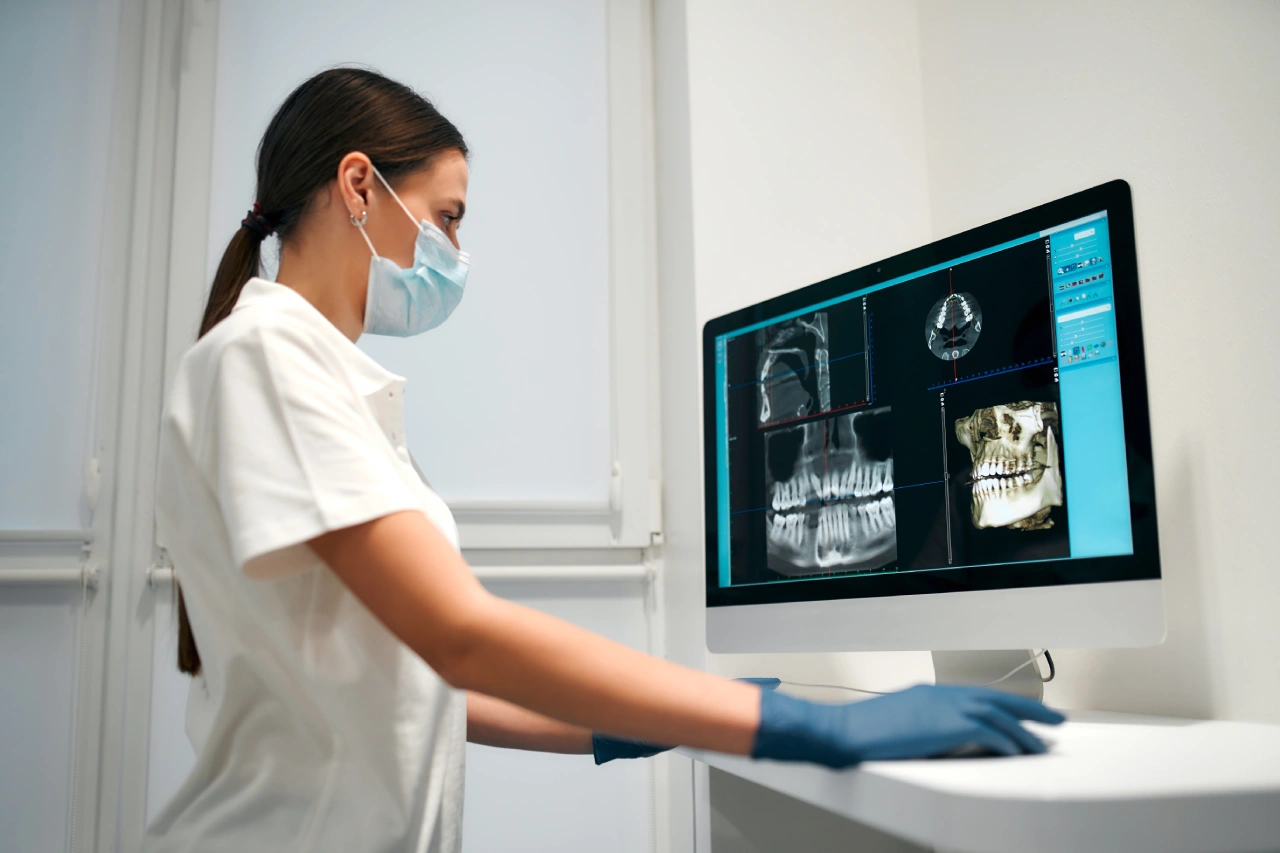
Types of Orthodontic Surgeries
Canine Exposure
When teeth don't fully emerge (erupt) into the mouth, they are said to be impacted. While wisdom teeth are the most commonly impacted, canine teeth can often also fail to erupt properly. In many cases, your orthodontist can guide the tooth into the correct position, but it will first need an attachment placed to allow the necessary traction. This involves a minor surgery to expose the tooth and bond the appliance. Once healed, your orthodontist will gradually move the tooth into the correct position over the coming months.
Temporary Anchorage Devices (TADs)
Also known as skeletal anchorage devices, TADs are small, screw-like implants used in orthodontics to provide a stable anchor point for moving teeth. They are usually made of titanium and are inserted into the jawbone through or into the gum tissue. They're necessary in cases where orthodontic appliances (like braces or clear aligner trays) are unable to achieve the desired tooth movement by themselves.
Surgically-Facilitated Orthodontic Therapy (SFOT)
Also known as accelerated osteogenic orthodontics (AOO) among other names, SFOT is an advanced orthodontic technique that combines traditional orthodontic treatment with a surgical procedure to significantly speed up tooth movement. There are multiple variants of the procedure, but most involve creating micro-cuts or perforations in the bone adjacent to the teeth being moved. The bone becomes temporarily softer, allowing teeth to move more easily, which can reduce the duration of orthodontic treatment by half or more.
Frenectomy
A frenum is a small band of tissue that connects the lip, cheek, or tongue to the surrounding structures. When it's too tight or too prominent, it can restrict movement, cause a gap between the front teeth, or interfere with orthodontic treatment. A minor in-office procedure releases or removes the frenum, with a short recovery.
Premolar Extractions
When there isn't enough space in the mouth to align the teeth properly, strategic removal of one or more premolars creates the room orthodontic treatment needs to work. Timing relative to your braces or aligner treatment is coordinated with your orthodontist for the best outcome.
Mesiodens and Supernumerary Tooth Removal
A mesiodens is an extra tooth that grows between the upper front teeth. More broadly, any supernumerary (extra) tooth can block the eruption of permanent teeth or prevent orthodontic movement altogether. Removing them at the right time clears the path for normal development and allows treatment to proceed as planned.
Have questions? We've got answers.
FAQs
Why can't you just pull the stuck canine and put an implant in later?
It's a reasonable consideration, but in almost every case it's worth the effort to save the tooth. Canines are among the most durable teeth in the mouth and often outlast every other tooth. Extracting an impacted canine also tends to leave a bony defect at the site, which can make future implant placement difficult or impossible. And since implants can't be placed until jaw growth is complete (which may be years away in younger patients), extraction creates a long gap in treatment with no good interim solution. We consider extraction a last resort, reserved for cases where guided eruption truly isn't possible.
How long until my canine is in the right position after exposure?
Like a lot of things, it varies considerably from case to case. Younger patients tend to see faster movement because their bone is less dense and more responsive to orthodontic forces. The angle, depth, and position of the impacted tooth all matter as well; a canine that is only slightly off course will move more predictably than one that is severely displaced or horizontal. Whether the tooth is impacted in the palate or toward the cheek side also makes a difference, as palatally impacted canines tend to take roughly twice as long to emerge. Most patients can expect the tooth to first appear in the mouth somewhere between six months to over a year after exposure, with full alignment into the arch taking anywhere from 18 to 30 months from the time of surgery. These are wide ranges because the variables are genuinely significant. Your orthodontist will have the best sense of the expected timeline once movement is underway, but it is worth going in with realistic expectations: this is a process that rewards patience.
How does a TAD work, and what's the procedure to get one like?
A temporary anchorage device, or TAD, is a small titanium fixture placed into the jawbone that gives your orthodontist a fixed point to push or pull teeth from, something that conventional braces can't always provide on their own. There are two main types. The more common is a small screw placed directly through the gum tissue in a quick, minimally invasive step done under local anesthesia. The other is called a miniplate, which is a slightly larger option used for more complex movements. Miniplates require a small incision and a few stitches but is still an outpatient procedure. Recovery for both is minimal, and most patients return to normal activities the same day.
What should I expect after a frenectomy?
It depends on which type of frenectomy was performed. A labial frenectomy, or the removal of the frenum connecting the lip to the gum, has a straightforward recovery. You might expect some soreness and minor swelling for a few days, manageable with over-the-counter pain relievers. A lingual frenectomy, which releases the frenum beneath the tongue, can cause a bit more swelling, although we routinely use steroids as part of our protocol to keep swelling and discomfort well-controlled. Myofunctional therapy is frequently recommended to help the tongue relearn proper movement, and some patients notice temporary changes in speech as it adjusts. This typically resolves with time and therapy.
My orthodontist wants the premolars removed. Why?
Premolar extraction s are one of the more commonly misunderstood recommendations in orthodontics, and the conversation around them has evolved considerably over the past few decades. The core rationale is space: when the dental arch lacks room to align teeth properly, removing strategically chosen premolars creates it. Without that space, teeth cannot be moved into their correct positions regardless of treatment duration. There has also been considerable debate about whether extractions affect airway development. The American Association of Orthodontists addressed this question in 2019 and examined it more thoroughly in a 2026 update, concluding that no substantive evidence supports a causal relationship between orthodontic extractions and airway obstruction. The right treatment decision still depends on the individual patient's anatomy, growth stage, skeletal classification, and clinical picture. If you have questions about an extraction recommendation, a detailed conversation with your orthodontist is the right starting point. And of course, we're happy to discuss the surgical side at your consultation.