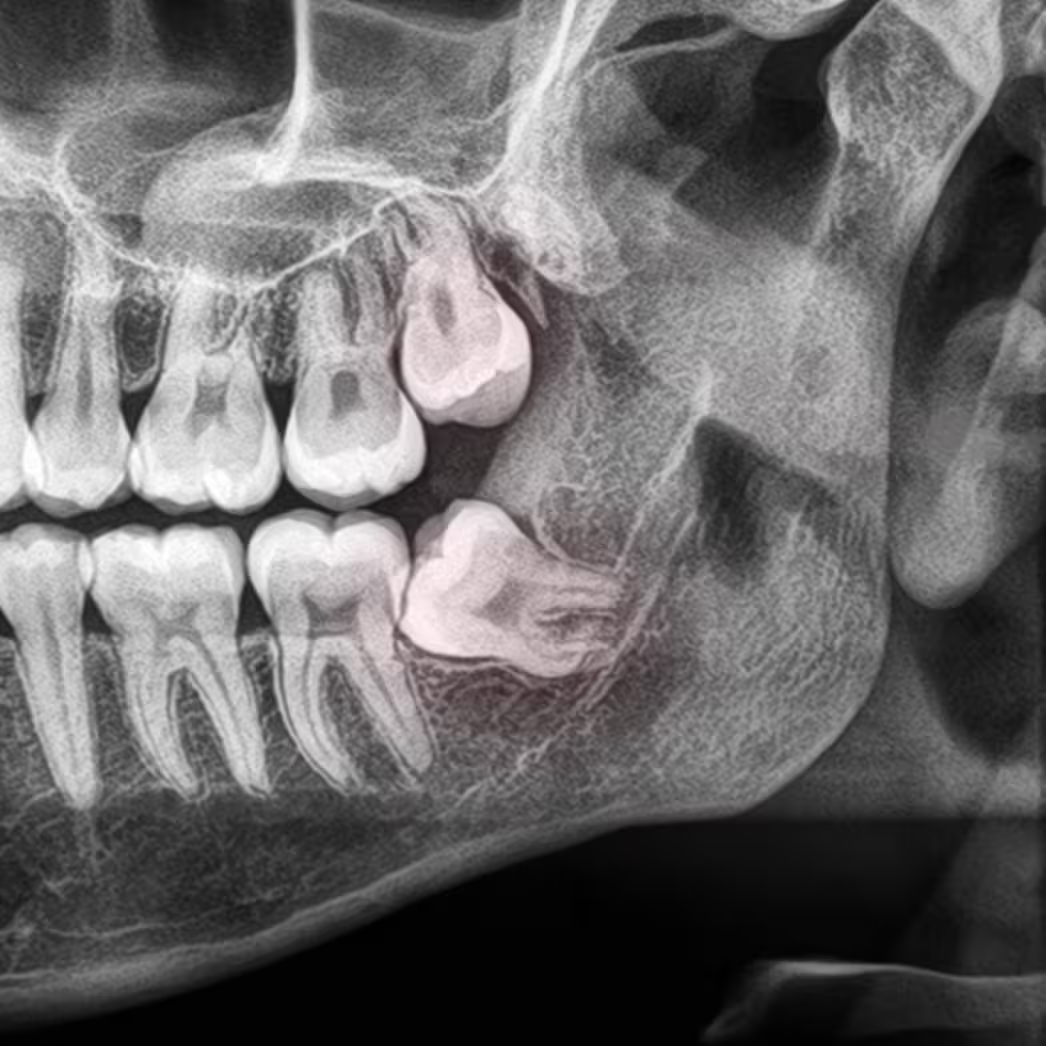
Do all four wisdom teeth really need to come out at once?
Like most oral surgeons in this country, my most common category of referral is for wisdom tooth extractions. Some referrals call out specific teeth for removal (usually the lowers), but a lot simply default to a hastily-written “EXT THIRDS.”
When one or more of the teeth have symptoms — pain, swelling, infection, etc. — the decision to remove those is obvious. A common move, though, is to remove all four in a single unified procedure. For a lot of patients, this is smart. For others, it's overkill. Where and how do we draw the line?
Really, there are a few questions at play here. First, do all four teeth even need to come out? And if not, are they likely to need to come out in the future? Is there something in the future that might make that removal harder? Easier? It's a balance between wanting to do the least amount of surgery possible, but also to make what surgery that does need to be done be able to happen as easily as possible.
Making the call
To that end, one of the first things I look at is the patient's age. If we're catching wisdom teeth early on (late teens to early 20s), a more definitive approach is prudent. Alveolar bone, or the part of the jawbone that holds teeth, is butter-soft at that age, and tooth extraction is considerably less traumatic, especially if the wisdom teeth haven't fully developed their roots yet. The ability to take advantage of this brief window eclipses the (slim) chance that the tooth might have been able to be retained for life without developing a problem at some point. This preventative measure is the so-called 'prophylactic extraction.'
Once we're past that window, the decision becomes a little less automatic. Completion of root development anchors the wisdom teeth more securely in the bone, which itself becomes less forgiving as vascularity and elasticity decrease with age. Capacity for healing drops somewhere around age 21-25, and continues to worsen with age. In my experience, the effect doesn't seem to be clinically significant until the late 30s or early 40s, beyond which point extracting third molars is best done on an as-needed basis.
(Sidenote: this begs the question: what is “needed?” I generally avoid preventive removal of symptom- and disease‐free impacted wisdom teeth in middle age and beyond. If they haven't been an issue for the last 20+ years, then removal “just in case” is hard to justify in my opinion, and a 2020 Cochrane review would agree. That said, the idea that a long trouble-free past means atrouble-free future isn't well-supported, as data from the AAOMS show that risk of disease accumulates with retention over time, rather than declining. It's also important to define “disease” in this context, as that's not usually something the patient can feel. Development of cysts and tumors, periodontitis, and tooth decay associated with wisdom teeth often go unnoticed without a proper exam and the right imaging. So even when the teeth are kept, the informed decision to do so needs constant reaffirmation, and regular surveillance at recall visits is necessary.)
Beyond age, there's also an element of professional judgement in this, where something of a forecast needs to be made. I consider the patient's general attitudes toward dental (and overall) health. Are there any progressive systemic diseases that might impair future healing? Are they seeing their dentist regularly? How is their dental hygiene? A high 'caries index' — the number of decayed, missing, or filled teeth — predisposes a patient toward future problems more than someone with a full complement of virgin teeth, and someone with a higher risk may benefit from a more aggressive treatment approach.
The case for one session
In any case, taking out all the teeth planned for removal in a single surgery is the most common approach, and the one I generally advocate for. I'll occasionally be met with shock at the idea of taking out four (give or take) teeth at once, but my counter is pretty obvious when spelled out.
We often do these surgeries under sedation, and minimizing the minutes and sessions under anesthesia is generally good practice (not to mention more economical). Nobody wants to do surgery, and the only thing worse than going under the knife is doing it twice. Recovery, pain, and downtime aren't multiplied with every tooth extracted, as all sites heal together in parallel.
And it's not just the post-op that matters — the pre-op logistics are a hassle most would prefer to negotiate only once as well. Pre-procedure anxiety, fasting, and securing a companion to assist in getting home are all things that don't usually get any easier a second time around.
The case for staging
For people who do choose to break up their case, the reason is usually one of economics. Having their extractions done piecemeal spreads the cost of treatment out over time, especially when limited insurance benefits are expected to renew in the next year. (Sedation anesthesia changes the calculus a bit, as two sessions of that will drive up the total cost.)
One added benefit of the staged approach is that when extractions are limited to, say, one side of the mouth, it might allow for a little easier eating by leaving the opposite side unaffected. The tradeoff here, of course, is going through the weeklong recovery again after each session, with the swelling, pain, mushy diet, and drugs being replicated each time.
There are also select cases where staging the extractions makes clinical sense. Certain medical conditions (intellectual disabilities, bleeding disorders, etc.) create intolerances to longer or more extensive procedures, and tackling extractions in multiple shorter sessions may be the preferred method.
So, all at once, or spread it out?
For most young adults with diseased (or highly likely to become diseased) third molars, I'll usually advise a one-and-done approach: get it done in a single surgery and put it to bed for life. For edge cases where medical history or an otherwise diminished healing capacity start complicating the picture, staging can be a more appropriate solution.
There isn't a formula that spits out an answer here, and I'd be suspicious of anyone who claims otherwise. The decision takes into account age, disease risk, overall health, and a fair amount of professional judgment about the specific patient in front of me, not just a set of teeth on an x-ray. Which is really the point: "EXT THIRDS" might get the referral into my schedule, but it's not a treatment plan.
Recent Posts

The ultimate post-surgery eating guide

PRF: blood-based treatment to speed healing after surgery