Save your teeth or start over?
It may be a bit uncouth to say aloud in the dental realm, but the reality is that every tooth begins a slow death spiral the moment a drill touches it. It usually goes something like this:
- Small filling (which eventually gets replaced with a…)
- Large filling (which eventually leads to a…)
- Root canal + buildup/crown (which, given enough time, often needs a…)
- Retreatment of root canal (which may not work, in which case you'd likely be looking at an…)
- Extraction + implant
Compound that over 30-odd teeth and several decades (not to mention the possibility of gum disease), and the problem is no longer a tooth. It's the teeth.
Obviously, this can get expensive, and not just financially — the hours spent in the chair and the mental toll of constantly fixing failing dentistry can be exhausting. That sort of approach can't be sustained forever. At some point, it starts making more sense to quit thinking tooth by tooth, and instead focus on bringing the whole arch1 back to function.
So the question becomes: how, exactly, do we stop trying to fix individual teeth and start over with a clean slate?
Hitting the reset button
Full-arch rehabilitation, also marketed as All-on-4®, All-on-X, or "teeth in a day", has been an especially hot topic in the dental field for the last decade or two, as the technology involved has been making some real strides. It involves removing every tooth in the jaw (upper, lower, or both), smoothing and leveling the supporting bone, and placing multiple dental implants throughout. A full-arch prosthesis (the new teeth, which come in various forms) is then anchored to the implants, restoring the bite.2
This usually means removing a few teeth that are technically "healthy" on their own, which can surprise a lot of patients. But employing a broader arch-level strategy means that if the arch is broken, we fix the arch. A handful of relatively good teeth can't carry a mouth that's failing around them — the whole "forest for the trees" thing.
So when is it time?
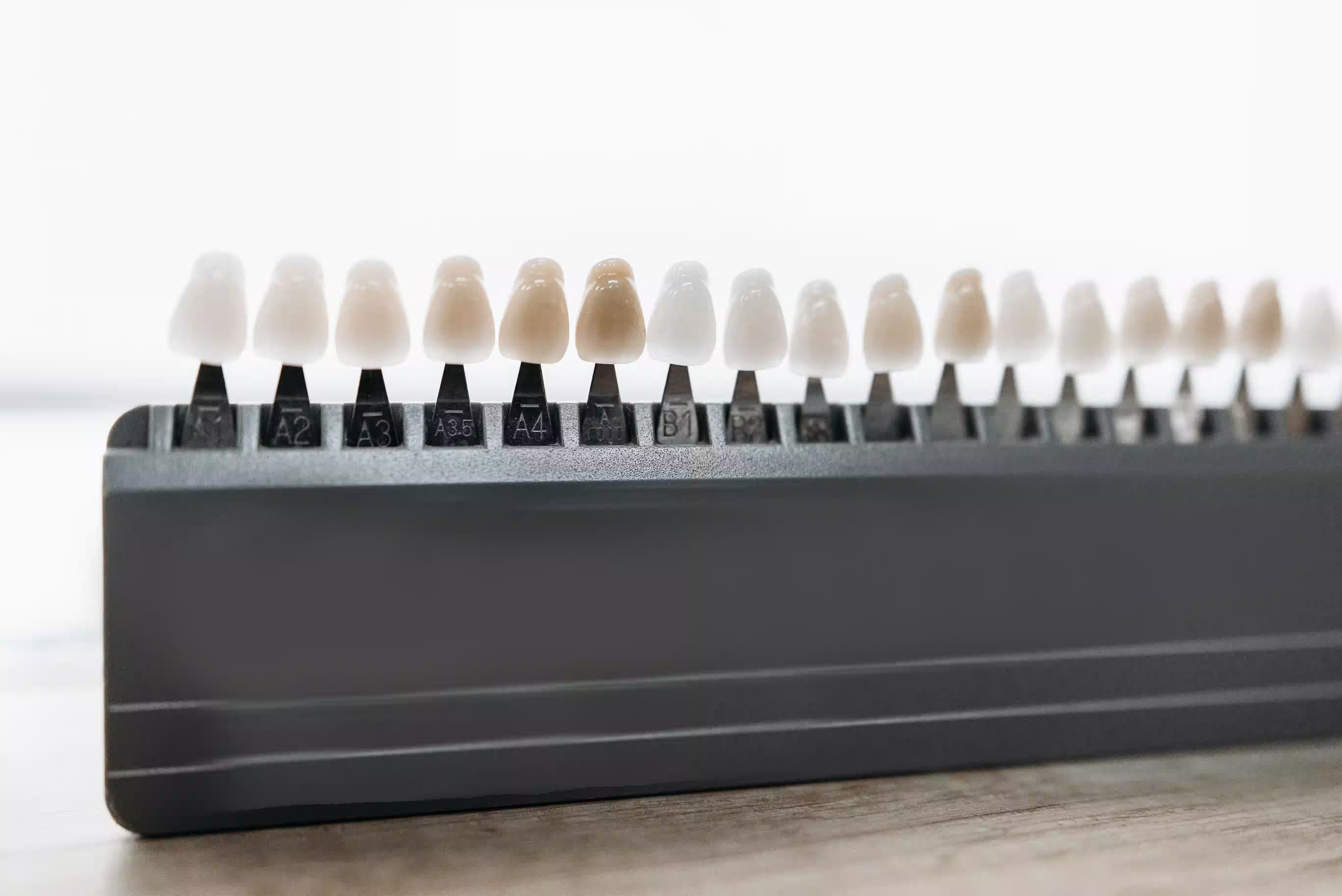
There's no single number of bad teeth that settles it. The switch from a full set of natural teeth to a full-arch prosthesis can be an overnight transformation in someone seeking care after years away from the dentist. But in someone staying on top of their dental treatment, the change is usually more gradual. As teeth are lost, single-tooth implants, short-span bridges, or partial dentures are the usual solutions. Eventually though, this "patchwork dentistry" becomes increasingly difficult to harmonize. Multiple components in various states of repair, teeth in differing shades, implants from different manufacturers, and an irregular bite alignment start to tip the balance toward a unified solution.
The decision takes into account a handful of factors. Starting over usually makes sense when:
- Most of your teeth are failing (due to bone loss, decay, or infections)
- Multiple teeth are already missing
- The remaining teeth and bone have shifted dramatically and are no longer positioned well for function and aesthetics
- The healthy teeth that remain can't support a stable bite on their own
But all else being equal, natural teeth have an edge. They sit in a cushion of ligament that senses pressure and texture, and implants can't fully replicate that. That's why saving your teeth usually still makes sense when:
- You're relatively young
- Only a few teeth are in real trouble
- The teeth are generally positioned well for both function and aesthetics
- The disease that damaged them (gum disease, cavities) is now under control
- Your healthiest teeth are strong and in useful places, like molars and canines
Cost is a factor that can tip the decision either way. While full-arch treatment is an investment on the level of a car purchase, having major work done on multiple teeth can add up to a similar total, even if spread out over several years. At some point, trying to restore everything just isn't the most economical choice.
Age matters, too, because both paths have a lifespan. Many people assume implants are the permanent option and natural teeth are the finite one. In reality, both wear out, and which one is likely to run out first is part of the decision.
With good placement and home care, most implants can last for decades. The teeth attached to them, however, usually give out first. Like a car, a full-arch prosthesis needs regular maintenance, occasional repairs, and eventually replacement. One placed at age 45 will likely need to be remade at least once. At 75, the math looks a little different.
Making the call
In some cases, the decision to go full-arch is obvious. In others, it's an appraisal of the prognosis, and a trade of one type of upkeep for another. The investment can be significant, but so can the improvement in quality of life. Your dentist is best positioned to determine whether your teeth can be restored and what that would take. My role is the surgical side: evaluating your situation, planning and executing your surgery, and maybe helping that spiral to straighten out just a little. ◾
—
1 An "arch" of teeth refers to either the upper or lower jaw, but double-arch treatment is definitely a thing.
2 A common misunderstanding is what the term implant refers to. An implant is the foundational hardware (usually a type of screw) that gets inserted into the bone and is not visible after surgery. The prosthesis is the tooth/teeth that attach to it, e.g. crown, bridge, denture, etc.
Recent Posts
Save your teeth or start over?

The ultimate oral surgery eating guide